
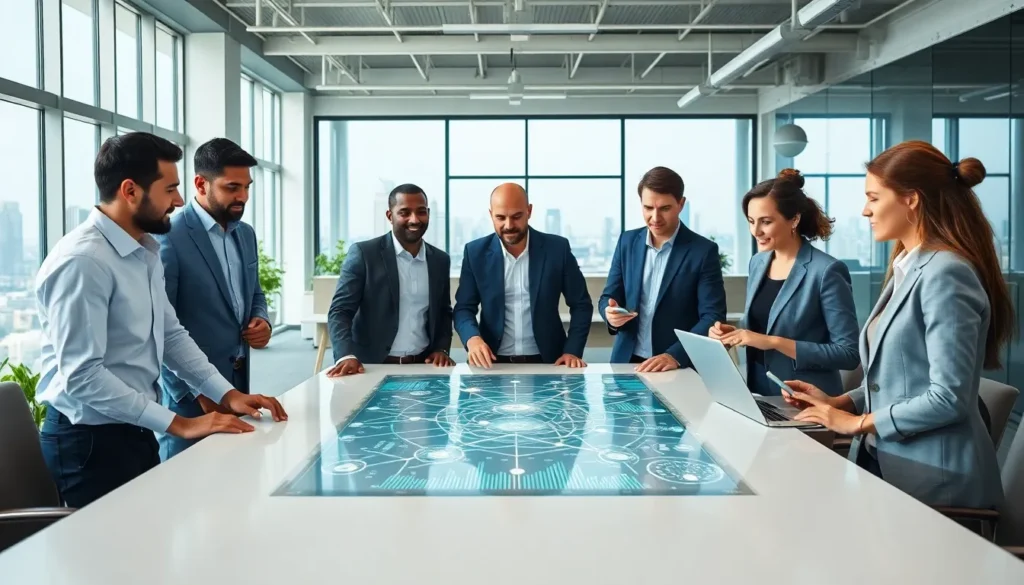

Creative thinking trends 2026 are shaping how professionals approach innovation, collaboration, and problem-solving. The year ahead brings significant shifts in how individuals and organizations generate ideas, build teams, and deliver results.
From AI-powered brainstorming tools to emotionally intelligent leadership, the creative landscape is changing fast. Businesses that adapt to these creative thinking trends will gain a competitive edge. Those that don’t risk falling behind.
This article covers the five most important creative thinking trends 2026 will bring. Each trend offers practical insights for professionals, teams, and organizations ready to stay ahead of the curve.
Table of Contents
ToggleKey Takeaways
- Creative thinking trends 2026 emphasize AI-augmented ideation, where professionals use machine speed alongside human insight to generate stronger, more innovative ideas.
- Multidisciplinary teams that blend diverse expertise—from engineering to art to behavioral science—produce the most innovative solutions by challenging assumptions from multiple angles.
- Emotional intelligence is now essential for creative work, enabling teams to collaborate effectively, give constructive feedback, and take creative risks.
- Sustainability constraints are driving innovation, pushing creative teams to develop eco-friendly solutions like circular design and alternative packaging materials.
- Decentralized and asynchronous teams allow organizations to access global talent and give creative professionals more autonomy over when and how they work.
- Professionals who combine technical skills with cross-disciplinary knowledge and emotional awareness will gain the strongest competitive edge in 2026.
AI-Augmented Ideation and Human-Machine Collaboration
Artificial intelligence is changing how people brainstorm and develop ideas. In 2026, creative thinking trends point toward deeper integration between human creativity and machine capabilities.
AI tools now generate concept variations, suggest unexpected connections, and speed up the ideation process. But they don’t replace human judgment. Instead, they amplify it. A designer might use AI to produce 50 logo concepts in minutes, then apply creative instincts to refine the best options.
This human-machine collaboration is becoming standard practice. According to recent industry surveys, over 60% of creative professionals already use AI tools in their workflow. That number will grow in 2026.
The key shift? Creative professionals are learning to prompt AI effectively. They’re developing new skills around input quality, iteration, and evaluation. The best results come from pairing machine speed with human insight.
Organizations that embrace this trend see faster project timelines and more diverse idea pools. They’re not choosing between human or artificial intelligence. They’re using both.
Creative thinking trends 2026 favor professionals who see AI as a partner, not a threat. Those who learn to collaborate with machines will produce stronger, more innovative work.
Multidisciplinary Approaches to Problem Solving
Single-discipline thinking is losing ground. Creative thinking trends 2026 emphasize cross-functional collaboration and diverse perspectives.
The most innovative solutions often come from unexpected combinations. A healthcare company might hire a game designer to improve patient engagement. A financial services firm could bring in behavioral psychologists to redesign their app interface.
This approach works because different fields bring different mental models. An engineer thinks about systems and constraints. An artist focuses on emotion and expression. A data scientist looks for patterns. Together, they see problems from multiple angles.
Companies are restructuring teams to encourage this mixing. Project groups now include members from marketing, engineering, design, and operations. The goal is productive friction, different viewpoints that challenge assumptions and spark new ideas.
Education is following suit. Universities report growing enrollment in interdisciplinary programs that combine technology, arts, and business. Students want skills that span categories, not credentials confined to one box.
Creative thinking trends 2026 reward generalists who can connect dots across fields. Specialists still matter, but the highest value goes to those who translate between disciplines and synthesize diverse inputs into coherent solutions.
Emphasis on Emotional Intelligence in Creative Work
Technical skills matter. But creative thinking trends 2026 place equal weight on emotional intelligence.
Why? Because creativity doesn’t happen in isolation. It requires collaboration, feedback, and the ability to read a room. Teams with high emotional intelligence navigate disagreements productively. They give honest critiques without damaging relationships. They build trust that enables risk-taking.
Research supports this shift. Studies show that teams with emotionally intelligent members produce more innovative outcomes. They communicate better, recover from setbacks faster, and maintain motivation through long projects.
Leaders are paying attention. Hiring processes now assess emotional skills alongside technical abilities. Interview questions probe how candidates handle conflict, receive criticism, and support struggling colleagues.
Creative thinking trends 2026 also emphasize self-awareness. Professionals who understand their own biases and emotional triggers make better creative decisions. They know when stress is clouding their judgment. They recognize when ego is blocking a better idea.
Training programs in emotional intelligence are expanding. Companies invest in workshops on active listening, empathy, and constructive feedback. These aren’t soft skills, they’re essential skills for creative work.
The bottom line: technical brilliance without emotional intelligence creates friction and limits impact. The best creative professionals in 2026 combine both.
Sustainability-Driven Innovation
Environmental concerns are driving creative thinking trends 2026 in powerful ways. Sustainability isn’t just a marketing angle, it’s becoming a core design constraint.
Consumers demand eco-friendly products. Regulations require lower emissions and reduced waste. Investors favor companies with strong environmental records. These pressures force creative teams to innovate within tighter boundaries.
And constraints spark creativity. When designers can’t use certain materials, they find alternatives. When engineers must reduce energy consumption, they discover efficient solutions. Limitations push creative thinking in productive directions.
Circular design is gaining momentum. Products are conceived with their entire lifecycle in mind, from raw materials through disposal or recycling. This approach requires creative problem-solving at every stage.
Packaging innovation offers clear examples. Brands are replacing plastic with mushroom-based materials, seaweed films, and compostable alternatives. These solutions required creative thinking that combined biology, chemistry, and design.
Creative thinking trends 2026 position sustainability as an opportunity, not an obstacle. The organizations leading this shift treat environmental goals as creative challenges that drive differentiation and customer loyalty.
Professionals who understand sustainable design principles will find growing demand for their skills. Those who can balance environmental responsibility with aesthetic appeal and functional performance will stand out.
Decentralized and Asynchronous Creative Teams
Remote work changed everything. Creative thinking trends 2026 continue that transformation with decentralized and asynchronous team structures.
Geography no longer limits talent pools. A creative director in Chicago can lead a team with designers in Berlin, developers in São Paulo, and strategists in Singapore. This global reach brings diverse perspectives and round-the-clock productivity.
Asynchronous work is central to this model. Team members contribute when they’re most creative, not when a meeting is scheduled. They document ideas in shared platforms, review each other’s work across time zones, and build on contributions without real-time interaction.
This approach requires new tools and habits. Teams use collaborative whiteboards, video messages, and detailed project documentation. Communication becomes more intentional. Feedback is written clearly because there’s no chance for immediate clarification.
The benefits extend beyond logistics. Asynchronous work reduces meeting fatigue and protects deep focus time. Creative professionals report higher satisfaction when they control their schedules and work environments.
But challenges exist. Building team culture across distances takes effort. Leaders must create connection points and ensure everyone feels included even though physical separation.
Creative thinking trends 2026 favor organizations that master distributed collaboration. They access global talent, reduce overhead costs, and give creative professionals the autonomy they value.


